
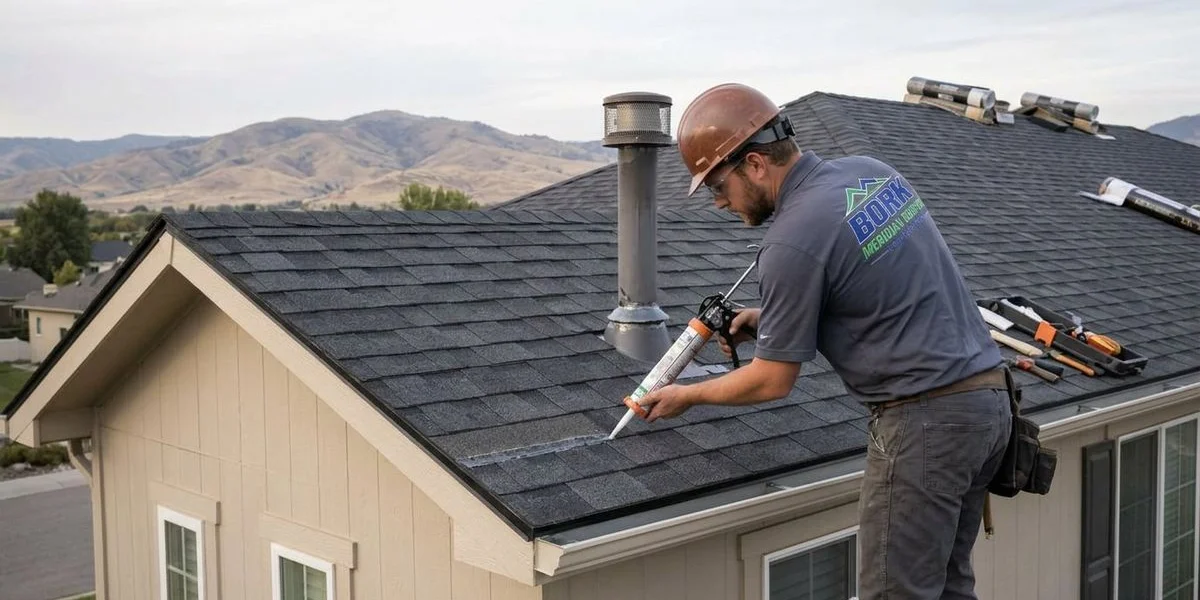
Why Commercial Roof Maintenance Matters
We see it happen every year in the Treasure Valley. A building owner ignores their roof until a ceiling tile turns brown. By then, the damage to the insulation and deck is extensive.
Industry data consistently highlights the financial gap between proactive care and reactive repair. A well-maintained commercial roof can last 25 to 40 years. Neglecting that same system often cuts its lifespan in half.
Our team has analyzed maintenance costs across hundreds of local properties. The results are stark. Proactive maintenance typically costs around $0.14 per square foot annually. Reactive repairs average nearly $0.25 per square foot.
That is a significant difference for any business budget.
Idaho’s climate makes this equation even more critical. Our region experiences over 100 freeze-thaw cycles annually. This constant expansion and contraction puts immense stress on roofing materials.
We built this checklist to help you stay ahead of those costs.
| Maintenance Approach | Est. Annual Cost (per sq. ft.) | Typical Lifespan |
|---|---|---|
| Proactive (Inspections & minor fixes) | $0.14 | 25-40 Years |
| Reactive (Fix on failure) | $0.25+ | 10-15 Years |
Spring Maintenance (March - May)
Spring presents the most critical window for roof care in our state. The snow has melted, and the material is expanding as temperatures rise. You must address winter damage before the spring rains exploit it.
Post-Winter Inspection
We recommend starting this process as soon as the roof is safe to walk on.
- Walk the grid. Don’t just look at the edges. Walk the entire surface area to find “alligatoring” (cracks resembling reptile skin) on asphalt or seam lift on TPO/EPDM membranes.
- Check the flashings. Metal expands and contracts at a different rate than the roof membrane. This movement often tears sealants around HVAC units and vents.
- Identify ponding water. Look for standing water 48 hours after rain. A puddle just one inch deep weighs roughly 5.2 pounds per square foot, adding unnecessary structural stress.
- Inspect the perimeter. High winds in the Boise foothills often lift metal coping on parapet walls.
Drainage System
Our crews often find drains completely choked by debris after winter.
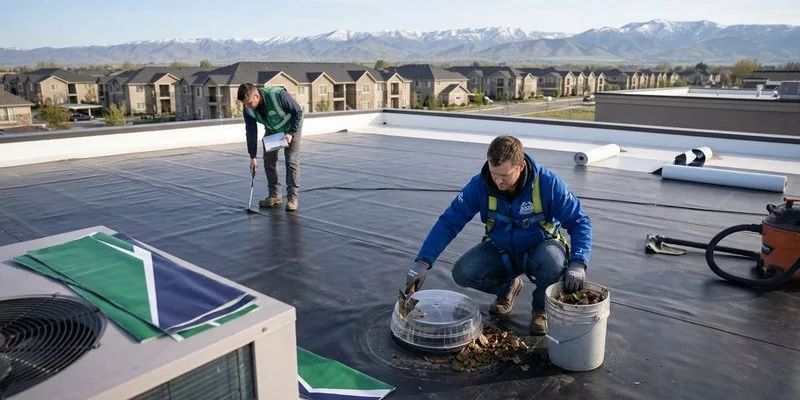
- Clear the strainers. Remove pine needles, leaves, and sediment from all scuppers and internal drains.
- Test the flow. Run a hose into the drain. If water backs up, you likely have an ice-induced blockage or a crushed pipe deeper in the system.
- Secure the downspouts. Heavy ice loads often detach downspouts from the wall. Re-secure them to prevent water from pouring directly onto your foundation.
Vegetation and Debris
Moss holds moisture against the roof surface, accelerating rot.
- Scrub the shade. Use a stiff brush to remove moss or algae from north-facing sections or areas shaded by HVAC units.
- Trim the canopy. Cut back tree branches to maintain at least a 6-foot clearance. This prevents abrasion damage during windstorms and reduces rodent access.
Summer Maintenance (June - August)
Summer in Idaho brings a different set of enemies: intense UV radiation and thermal shock. Roof surface temperatures can soar to 150°F or higher on a 95°F day.
Heat-Related Checks
We prioritize checking for material failure caused by extreme heat.
- Scan for blistering. Trapped moisture turns to vapor in the heat. This expansion creates bubbles or blisters in the membrane that will eventually pop and leak.
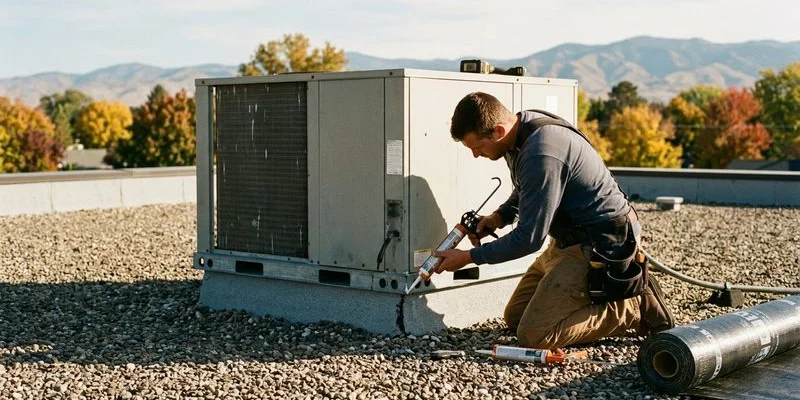
- Probe the sealants. Pitch pans (boxes around pipes) often dry out and crack in the high desert sun. Top them off with fresh pourable sealant.
- Check the curbs. Rooftop HVAC units work overtime in July. The vibration can loosen fasteners connecting the unit to the roof curb.
Storm Readiness
Our region is prone to sudden afternoon thunderstorms with high winds.
- Anchor loose items. HVAC panels, satellite dishes, and conduit pipes become projectiles in 50 mph winds. Secure them firmly.
- Clear drains again. Summer storms dump water fast. If a drain is 50% clogged, the water weight can rise quickly enough to threaten a roof collapse.
After Any Significant Storm
We urge clients to inspect their property immediately after severe weather.
- Walk the perimeter within 48 hours. Look for scouring (where gravel has been blown away) or tears from flying debris.
- Document everything. Take clear photos of any new damage. Insurance carriers require specific evidence to process claims.
- Act fast. Small punctures from hail might not leak immediately but will degrade quickly under UV exposure.
If your property is hit, our team provides free storm damage assessments for Treasure Valley businesses.
Fall Maintenance (September - November)
Fall is the final opportunity to seal the building envelope before the freeze sets in. The goal is to keep water out so it cannot freeze and expand inside your roof system.
Pre-Winter Preparation
We consider this the most financially impactful inspection of the year.
- Schedule a professional review. A thermal imaging scan can identify wet insulation under the membrane that is invisible to the naked eye.
- Seal every gap. Water expands by 9% when it freezes. A tiny gap in November becomes a gaping hole by January.
- Check mechanical fasteners. Fasteners can “back out” due to thermal cycling. This can puncture the membrane from below.
Drainage Preparation
Clogged drains in winter lead to massive ice dams.
- Deep clean gutters. Remove every leaf. Debris that freezes in the gutter will force melting snow to back up under the roof edge.
- Install heavy-duty guards. Standard residential leaf guards often fail on commercial buildings. Use heavy-gauge guards designed for high-flow scuppers.
- Verify slope. Ensure insulation has not compressed, creating low spots where ice will form.
Equipment Check
Our technicians double-check all utility connections before the snow flies.
- Verify gas lines. Check the wood or rubber blocks supporting gas lines. Rotting blocks can cause lines to sag or break.
- Close the cabinets. Ensure all access panels on HVAC units are screwed shut to prevent snow entry.
Winter Maintenance (December - February)
Winter work is dangerous and should be minimal. Your focus shifts from repair to load management and leak mitigation.
Snow and Ice Management
We advise strict caution when dealing with snow removal.
- Know your load limit. Most Idaho commercial structures are designed for a ground snow load of 20 to 25 pounds per square foot. Wet, heavy snow can exceed this quickly.
- Use plastic tools. Never use metal shovels on a roof. They will slice through TPO and EPDM membranes instantly.
- Leave a layer. If you must shovel, leave 2 inches of snow on the surface to protect the membrane from the shovel blade.
- Avoid standard salt. Rock salt can damage concrete pavers and corrode metal flashings. Use calcium magnesium acetate (CMA) if deicing is absolutely necessary.
Emergency Monitoring
Internal vigilance is key during the cold months.
- Watch the ceiling. Stains often appear days after a storm when the snow begins to melt.
- Check for deflection. If you see sagging sprinkler lines or doors that suddenly stick, the roof may be under excessive snow weight.
- Keep a patch kit. Have a bucket of wet-patch roof cement and mesh webbing ready for temporary emergency seals.
Year-Round Best Practices
Consistency is the secret to extending roof life. These habits save money over the long term.
Limit Foot Traffic
Every boot on the roof degrades the surface.
- Install walk pads. Create a designated path from the hatch to the HVAC units. This adds a sacrificial layer of protection.
- Log all access. require every contractor (HVAC, electrical, plumbing) to sign in and out. If damage appears after a service call, you will know who was up there.
Maintain Documentation
Insurers often deny claims due to “lack of maintenance.”
- Keep a digital log. Store photos, inspection reports, and repair invoices in the cloud.
- Track warranty dates. Know exactly when your material and labor warranties expire so you can schedule a final inspection before coverage ends.
Schedule Professional Inspections
Self-checks are vital, but they do not replace a pro.
- Hire a specialist. Professional roofers know how to spot failing seams or uncured flashings that look fine to a layperson.
- Get it in writing. A professional report serves as proof of due diligence for your insurance carrier.
Partner With a Local Commercial Roofer
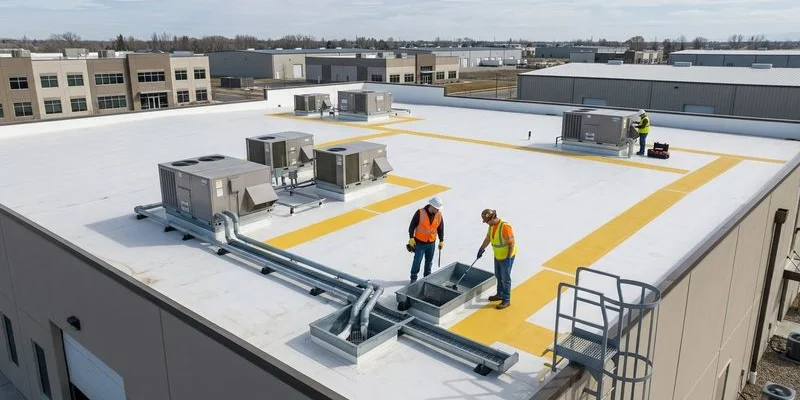
Effective maintenance requires a partner who understands the specific challenges of the Idaho high desert. At Bork Roofing, we tailor our inspection programs to the unique needs of properties in the Treasure Valley.
Our technicians track the history of your roof to predict issues before they become expensive leaks.
Contact us today to schedule your commercial roof inspection or to discuss a maintenance program tailored to your property.