
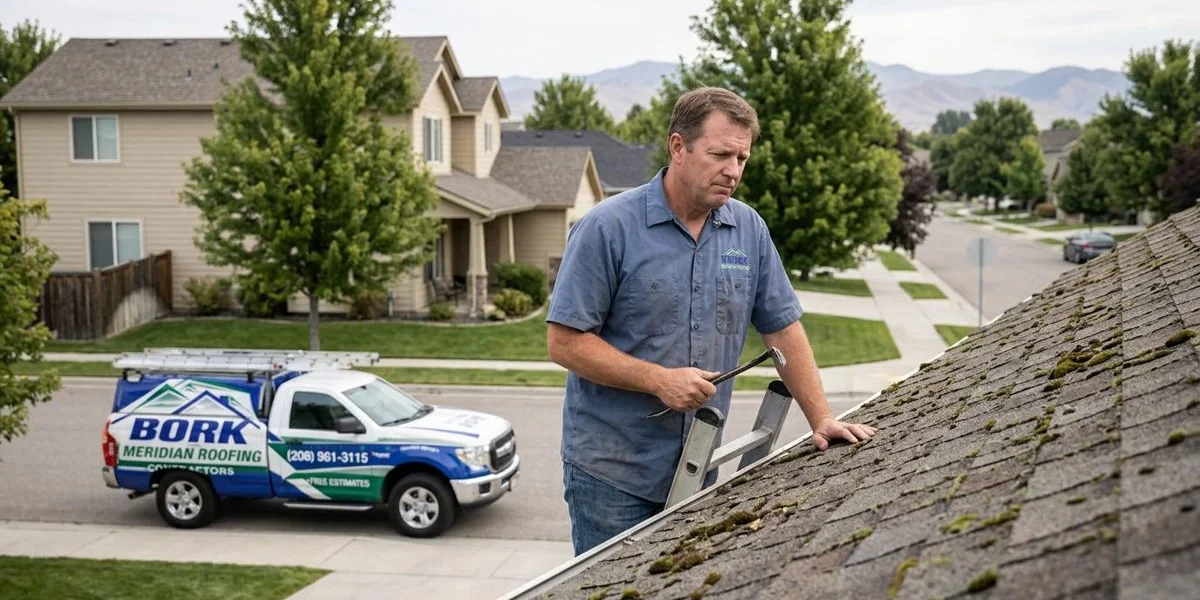
Most homeowners look at a slipped shingle and think it is a simple twenty-minute fix. We hear this question constantly from Treasure Valley homeowners: “Can I fix this myself, or do I need to call you?”
It is a fair question. We respect anyone who wants to save money and take care of their own property.
The answer depends entirely on the specific problem and your equipment.
Can You DIY Roof Repair, or Should You Hire a Pro?
This decision comes down to your comfort level with heights and the complexity of the damage. We have put together an honest assessment of which repairs are manageable and which ones carry too much risk.
Repairs You Can Reasonably DIY
We want to be clear about the risks involved. Even simple tasks are dangerous when you are twelve feet off the ground.
If you do not own a stable extension ladder or lack basic safety gear, call a professional for everything. Your safety is not worth saving a few hundred dollars.
Replacing a Few Missing Shingles
A windstorm might pull off one or two shingles while the rest of the roof remains intact. This is a manageable DIY repair if you can identify the exact missing piece.
You will need matching shingles, a flat pry bar, 1.25-inch galvanized roofing nails, a hammer, and asphalt roofing cement.
How to do it:
- Carefully lift the shingle directly above the gap to expose the nail strip.
- Remove any remaining nails or debris from the old shingle using your pry bar.
- Slide the new shingle into position and align it with the existing rows.
- Nail it down with four roofing nails placed just below the adhesive strip.
- Apply a quarter-sized dab of roofing cement over each nail head and under the tabs to seal them.
Important: This fix works effectively for one to three shingles in a low-slope area. If you find damage across a large section or on a steep pitch, call a professional.
Clearing Debris from Gutters
Gutter cleaning is the most common roof-related maintenance task. Every homeowner should be comfortable doing this or have it scheduled twice a year.
We recommend using a sturdy ladder with a standoff stabilizer to prevent crushing the gutter lip. Scoop out leaves and pine needles by hand or use a specialized gutter scoop before flushing the system with a garden hose.
Always maintain three points of contact on the ladder. Never lean your hips beyond the side rails to reach a spot further down. Move the ladder frequently rather than overreaching.
Applying Roofing Cement to Minor Cracks
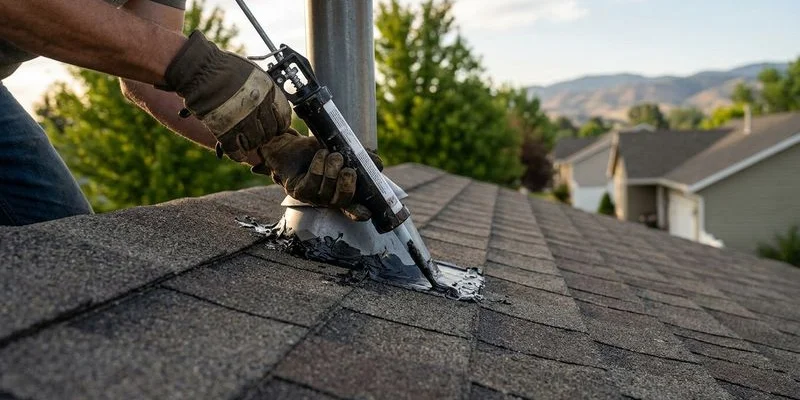
Small cracks in flashing sealant or minor gaps around vent boots often cause slow, annoying leaks. You can sometimes address these with a tube of high-quality plastic roof cement (like Henry 208) and a caulking gun.
This is a temporary fix rather than a permanent repair. It can stop a small leak for a season until a professional can provide a lasting solution.
Repairs That Require a Professional
Some tasks involve significant physical risk or specialized knowledge. We often see homeowners attempt these repairs only to cause further damage or void their material warranties.
Attempting these without proper training is a recipe for personal injury.
Any Repair on a Steep Roof
Roof pitch is the primary factor in determining safety. If your roof pitch is 6:12 or greater, meaning it rises six inches for every 12 inches of horizontal run, do not attempt any DIY work.
Steep roofs require harness systems, roof jacks, and safety ropes to navigate safely. Our crews are trained and equipped for these specific conditions.
The Reality of Risk: According to the Consumer Product Safety Commission, ladder and roof-related falls account for more than 160,000 emergency room visits annually in the US. The risk of a serious fall increases dramatically on pitches steeper than 4:12.
Flashing Replacement
Flashing is the metal channeling that seals joints where your roof meets chimneys, walls, skylights, and valleys. It is the most technical part of a roofing system.
Proper installation requires understanding how water flows over different materials. You must integrate the flashing with the surrounding shingles and underlayment to create a watertight seal that accommodates thermal expansion.
Common DIY Mistakes:
- Reusing old, rusted flashing to save money.
- Using silicone caulk instead of proper counter-flashing.
- Nailing through the flashing in a way that creates new leaks.
Improperly installed flashing is a leading cause of persistent structural rot. What looks like a simple metal bend actually involves multiple layers of integration.
Structural Repairs
You might see sagging in your roofline or feel “soft spots” on the deck when walking. These are signs that the damage has moved beyond the shingles and into the wood structure.
Roof decking replacement, rafter repair, and structural reinforcement require carpentry expertise. If you see daylight coming through the roof boards from the attic, you need a professional immediately.
Anything Involving the Underlayment
The underlayment is the final waterproof barrier installed between the roof decking and the shingles. Damage here requires a surgical approach.
You must remove shingles to access the underlayment and then properly reinstall everything to maintain the water-shedding overlap. This process requires specialized tools and experience to ensure the home remains watertight.
Complete Sections or Full Roof Replacement
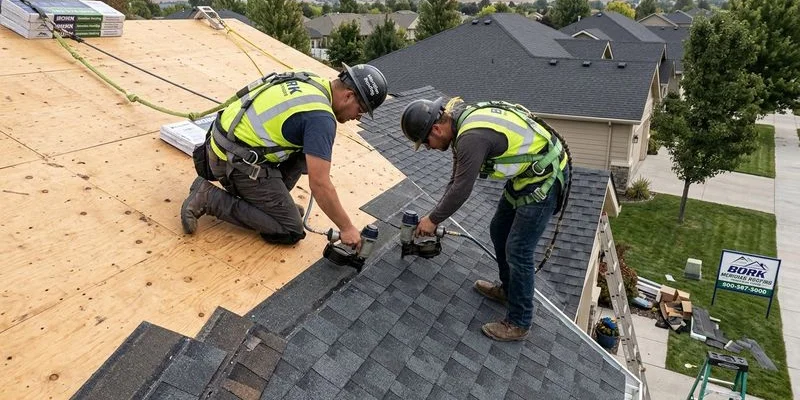
A full roof replacement is never a weekend project for a single person. It involves the proper tear-off and disposal of tons of old material.
The process includes inspecting the decking, installing ice and water shields in valleys, and applying new underlayment with precise overlaps. You must also install shingles according to strict manufacturer specifications to ensure warranty compliance.
Time vs. Exposure: Professional crews complete most residential roofs in one to three days. A DIY attempt can stretch into weeks. This leaves your home exposed to sudden weather changes during the process.
The Hidden Costs of DIY Roof Repair
Homeowners often look at the material cost and assume they are saving thousands. We suggest considering the factors that often get overlooked in that calculation.
Financial and Risk Comparison
| Factor | Professional Repair | DIY Repair |
|---|---|---|
| Warranty | Protects materials & workmanship | Often voided by improper install |
| Equipment Cost | Included in service | $400+ for proper ladder & safety gear |
| Insurance | Contractor carries liability | You are personally liable for accidents |
| Material Quality | Contractor-grade (Wholesale) | Retail grade (Higher markup) |
| Time Investment | 1-3 Days | Multiple weekends |
Warranty Issues
Most shingle manufacturers, such as GAF or Owens Corning, require installation by a certified professional for their full warranty to remain valid. If you install shingles yourself and they fail prematurely, the manufacturer may deny your claim.
A professional installation preserves your warranty coverage. This can extend 30 to 50 years on premium architectural shingles.
Insurance Complications
Insurance policies often contain clauses regarding “workmanlike” repairs. If a DIY repair fails and causes water damage to your home’s interior, your insurer may question the claim.
Companies frequently deny claims related to work performed by unlicensed individuals.
Safety Equipment Costs
Proper roof safety goes beyond a hammer and nails. You need harness systems, roof anchors, safety ropes, and non-slip footwear.
A Type IA fiberglass extension ladder alone can cost over $400. Purchasing this equipment for a one-time repair often costs more than the service call itself.
Quality of Materials
Professional roofers have access to commercial-grade materials and purchase at wholesale pricing. Retail prices at big-box home improvement stores are typically 30 to 50 percent higher.
You also face a limited selection of colors and styles at retail stores compared to professional supply houses.
A Practical Decision Framework
We use this checklist to help homeowners make the right call. Ask yourself these questions:
- Is the repair in a low, easily accessible area? If not, call a pro.
- Does it involve replacing more than a few shingles? If yes, call a pro.
- Is any flashing or metal work involved? If yes, call a pro.
- Is the roof pitch steep enough that you feel unsteady? If yes, call a pro.
- Does the damage extend below the shingle layer? If yes, call a pro.
- Are you comfortable working on a ladder at roof height? If not, call a pro.
If you answered “yes” to the first question and “no” to the rest, a DIY repair may be appropriate. In all other cases, professional repair is the safer and more cost-effective choice.
Get a Free Repair Estimate
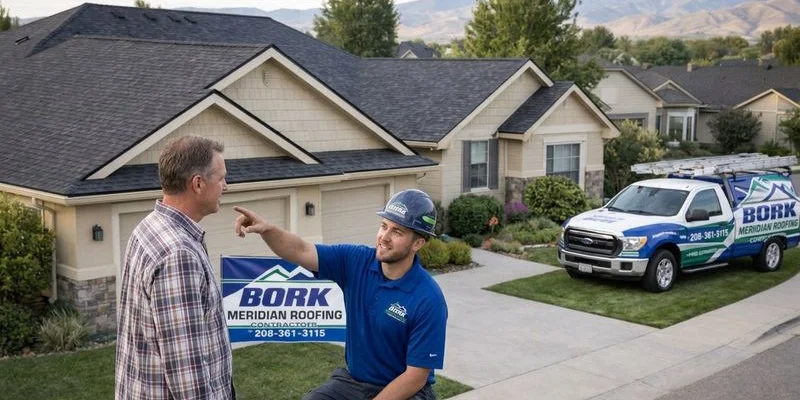
At Bork Roofing, we provide free estimates for all roof repair work across the Treasure Valley. We will be honest with you about whether a repair is something you can handle yourself or if it requires professional attention.
Contact us today and we will give you a straightforward assessment.
Your home is one of your biggest investments. Protecting it with quality roof repairs, whether DIY or professional, is always money well spent.